Skip to content
Silver Lining Foreclosure Solutions

California county guide

Foreclosure Help in San Bernardino County

San Bernardino County homeowners can review options with counselors before deadlines approach.

Updated November 21, 2026

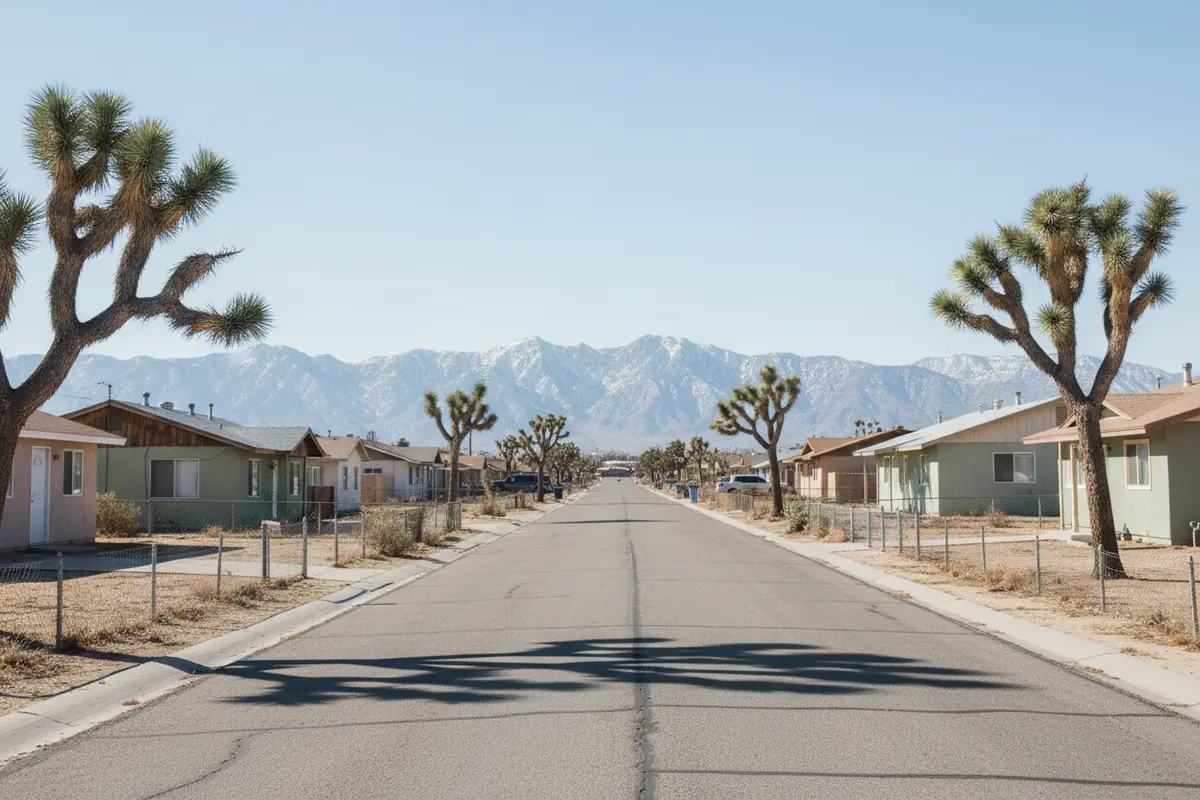
Joshua trees beside modest high desert homes in San Bernardino County on a winter afternoon.
Immediate local answer

Foreclosure help in San Bernardino County: where notices of default are recorded, when unpaid property taxes default on July 1, and the options open at each stage.

On this page
  1. Local Snapshot: Foreclosure in San Bernardino County
  2. Common Situations Homeowners in This Area Face
  3. Local Offices and Records: Where Your Notice and Tax Account Are Kept
  4. Options for Owners in San Bernardino County Who Want to Keep the Home or Sell
  5. Local Costs and Timing: What Sets the Pace of a Foreclosure Here
  6. Frequently asked questions
  7. Sources

If you own a home in San Bernardino County and are behind on the mortgage or the property taxes, options are usually still open. These include bringing the loan current, asking the servicer about a loan modification, forbearance or a repayment plan, a short sale, or selling before a trustee's sale. Which options remain depends on the stage your foreclosure has reached.

You may be holding a letter from your loan servicer about a missed payment. You may have a notice of default, or a notice of trustee's sale taped to your door. You may have a property tax bill you could not pay this year. Each of these marks a different point in a process with set steps. The local pieces are handled by the San Bernardino County Recorder, the Assessor and the Treasurer-Tax Collector. This page explains how those steps run, what each office keeps, and how the options that keep the home compare with the options that end in a sale.

Local Snapshot: Foreclosure in San Bernardino County

Most California home loans are secured by a deed of trust. A deed of trust is a recorded document that gives a trustee a "power of sale" if the borrower breaks the loan's terms. That power lets the lender foreclose without a court case, which is called a nonjudicial foreclosure. The formal steps run through public records rather than a courtroom.

The first formal step happens at the county recorder. Under Civil Code section 2924, the trustee, the lender or their authorized agent must first file a notice of default for record "in the office of the recorder of each county" where the property sits. For a home in this county, that means the San Bernardino County Recorder. Only the holder of the loan's beneficial interest, the original or a substituted trustee, or the holder's designated agent may record that notice or otherwise start the process.

Property taxes run on a separate track. The San Bernardino County Assessor sets the assessed value. The Treasurer-Tax Collector bills and collects the tax.

What this means for you: once a notice is filed with the Recorder, it is a public record. The steps that follow it are set by California statute, and they are the same in every California county.

Common Situations Homeowners in This Area Face

A missed mortgage payment. At this stage no notice of default has been recorded. The servicer is the company that collects your payments. It has not yet started the formal foreclosure, so a conversation about catching up or changing the loan terms usually still has the most room.

A notice of default. Civil Code section 2924 says the notice must do three things:

  • identify the deed of trust;
  • state that a breach has occurred; and
  • describe each breach the lender actually knows of, along with its election to sell the property.

If the default is curable, the notice must also carry the statement the reinstatement statute requires. For homes with no more than four units, a summary in English and other listed languages must be attached to the copy sent to the borrower.

What this means for you: the notice itself tells you what the lender says is wrong, and whether it can be cured.

A notice of trustee's sale. Civil Code section 2924 says not less than three months must pass after the notice of default is filed. After that, the trustee gives notice of sale stating its time and place. The trustee may record the notice of sale up to 5 days before that three-month period ends, as long as the sale date is no earlier than three months and 20 days after the notice of default was recorded.

What this means for you: the date on that notice is the date the trustee has set.

Unpaid property taxes. Rev. & Tax. Code section 3436 provides that at 12:01 a.m. on July 1, unpaid taxes, assessments, penalties and costs on real property are declared in default by operation of law. Property that is already tax-defaulted, and possessory interests, are excluded from this rule.

What this means for you: tax default happens automatically on that date, whether or not a mortgage is involved.

The stage you are at shapes which options are still open.

Local Offices and Records: Where Your Notice and Tax Account Are Kept

San Bernardino County Recorder. The Recorder's Document Recording page says the Recorder-County Clerk will accept any document California law authorizes or requires to be recorded, if the document contains the required information and can be photographed for reproduction. Notices of default are filed there under the statute above. The Recorder's page also says the office is prohibited by law from giving legal advice, including advice on choosing and preparing documents.

San Bernardino County Assessor. The Assessor's Change of Ownership page explains what happens when ownership changes. The Assessor receives a copy of the recorded deed and decides whether State law requires an appraisal. If it does, the owner is notified of the new assessment and has the right to appeal the value. The same page says the Assessor's Office does not send out tax bills. The bill comes from the Tax Collector.

San Bernardino County Treasurer-Tax Collector. This office mails the secured property tax bills and keeps your tax account. Its installment due dates, penalties and the move to the delinquent tax roll are set out under Local Costs and Timing below.

Counseling and legal help. Several outside resources are available. HUD-approved housing counselors work with homeowners on mortgage options. The Legal Aid Society of San Bernardino is a legal aid organization in the county. The California Courts run a statewide self-help center with procedural information. Silver Lining Foreclosure Solutions has no affiliation with any of them, or with any lender, court or government office.

Options for Owners in San Bernardino County Who Want to Keep the Home or Sell

Options that keep the home come first.

  • Reinstatement. You pay everything past due to bring the loan current. Whether the default can be cured this way appears on the notice of default itself.
  • Loan modification. You and the servicer agree to change the loan's terms, such as the payment or the interest rate.
  • Forbearance. The servicer agrees to reduce or pause payments for a set time, often after a hardship.
  • Repayment plan. You spread the missed amount over future payments.

Each of these depends on what the servicer agrees to. A HUD-approved housing counselor can go over the paperwork with you.

Bankruptcy. Bankruptcy is a federal court process. How a filing affects a scheduled sale depends on your facts, and that question belongs with a bankruptcy attorney.

A short sale. In a short sale, the home sells for less than the loan balance and the lender agrees to accept less. It ends ownership. It requires lender approval, and the lender's terms on any remaining balance matter.

Selling before the trustee's sale. An owner may sell before the sale date. There are two broad ways to do it:

  • Listing on the open market with a real estate agent. This can reach more buyers. It also means preparing the home, holding showings and waiting on a buyer's loan.
  • A direct sale to a buyer who pays cash and takes the home as it is. A direct offer is often lower than an open-market price, because that buyer takes on the repairs, the risk and the cost of reselling. What you get in exchange is less preparation, fewer showings and less dependence on a buyer's loan.

A house can be sold in its present condition either way. Your disclosure duties and the lien payoffs are the same whoever the buyer is.

Comparing written offers and estimated net proceeds is how an owner tells which way fits. Net proceeds are the price less commissions, repairs, carrying costs, loan payoffs and closing costs. The answer depends on your facts and the law that applies to them.

A warning about foreclosure consultants. In Civil Code section 2945, the Legislature found that homeowners in foreclosure are exposed to fraud by foreclosure consultants. That risk runs from the recording of a notice of default until surplus funds from a sale are distributed. The law therefore requires foreclosure consultant agreements to be in writing and permits homeowners to rescind them.

Put simply, anyone sent by a consultant has to show, on paper and under oath, that they hold a license and are bonded. Under Civil Code section 2945.11, a consultant's representative must give the owner two things:

  • written proof of a valid current California Real Estate Sales License and a bond of at least twice the property's fair market value; and
  • a written statement, under penalty of perjury, confirming both.

If the representative fails to do this, the owner may choose to treat the contract as void.

Local Costs and Timing: What Sets the Pace of a Foreclosure Here

Notice periods. The notice periods under Civil Code section 2924 are fixed by California law. They apply the same way in San Bernardino County as in every other county. Trustee and attorney charges vary from case to case, so they cannot be stated here.

Recording costs. The Recorder's Document Recording page points to its Fee Calculator for current recording fees. If a home is sold, the page also lists these charges:

  • Documentary transfer tax of $.55 per $500 of value, on taxable conveyances over $100, excluding liens already of record. It is collected at recording.
  • An additional $20 fee if the buyer does not file a Preliminary Change of Ownership Report.

Property tax dates. The Treasurer-Tax Collector's Important Dates page, as read in June 2025, says the Treasurer-Tax Collector mails original secured property tax bills in October. The first secured installment is due November 1 and the second is due February 1. The page lists these penalties:

  • A 10% penalty if the first secured installment is unpaid as of 5:00 p.m. December 10.
  • A 10% penalty plus a $10.00 cost if the second secured installment is unpaid as of 5:00 p.m. April 10.
  • On June 30, delinquent secured accounts move to the delinquent tax roll, with added penalties of 1-1/2% per month on unpaid amounts plus a $15.00 redemption fee.

The page notes that if a delinquent date falls on a weekend or holiday, it moves to the next business day. Default itself follows the July 1 rule described above. For a question about your own tax account, the Treasurer-Tax Collector's office is the place to ask.

A practical next step. The recorded notice of default or notice of trustee's sale for your parcel is on file at the San Bernardino County Recorder. Your property tax account is with the Treasurer-Tax Collector. Both are useful documents to have in hand, along with any questions, before a meeting with a HUD-approved housing counselor.

Free to ask · You decide

Not sure which path fits?

Share a few details and we'll help you understand options to keep or sell — on your timeline.

Explore my options Call (888) 274-9351

Free to ask

Tell us about your situation

Share a few details. You decide what happens next.

Privacy PolicyTerms of Use

Testimonials

I didn't want promises that a cash buyer could magically stop foreclosure. I wanted real numbers and deadlines.

P.C., Vista, CA

Talk to a HUD-approved counselor

Independent housing counseling is generally free or low-cost. We encourage it no matter which path you choose.

Search HUD's counselor directory ↗

Frequently asked questions

Who can help me save my house from foreclosure in San Bernardino County?

HUD-approved housing counselors are one starting point, because they work through servicer options with homeowners. The Legal Aid Society of San Bernardino and the California Courts self-help center are others. No one can promise a result. The terms of any loan change depend on what the servicer agrees to.

Where are notices of default recorded in San Bernardino County?

They are filed with the San Bernardino County Recorder, because the statute requires recording in the county where the property sits. Once recorded, the notice is a public document. That is also why owners in default often start receiving outside solicitations soon after it is filed.

What happens after a notice of default is recorded?

A waiting period follows, and then a notice of sale stating the time and place of the sale. Keep-home options such as reinstatement or a modification may still be open during this time, depending on the loan and the servicer. A sale before the trustee's sale date is also possible.

What is mortgage assistance, and does it make sense for a homeowner behind on payments?

Mortgage assistance usually means a loan modification, forbearance or a repayment plan offered by the servicer. Whether one fits depends on your income, the loan's terms and the stage of the foreclosure. A HUD-approved housing counselor can review those specifics with you.

What does it mean when property taxes become tax-defaulted in San Bernardino County?

It means the unpaid amounts have been declared in default by law as of July 1. No notice or hearing is needed for that to happen. The debt stays attached to the property, separate from any mortgage, and the Treasurer-Tax Collector handles the account.

Can a homeowner sell the property before the trustee's sale date?

Yes, an owner can sell before the sale date. The sale must still pay off the loan and any liens at closing, or the lender must approve a short sale. A buyer takes the home subject to the same recording steps and the same disclosure duties as any other sale.

Sources

Statutes, regulations and court sources

  1. 01Cal. Civ. Code § 2924 · California Legislative Information
  2. 02Cal. Rev. & Tax. Code § 3436 · California Legislative Information
  3. 03Cal. Civ. Code § 2945 · California Legislative Information
  4. 04Cal. Civ. Code § 2945.11 · California Legislative Information

Other sources

  1. 05San Bernardino County Assessor-Recorder-Clerk, Document Recording · arc.sbcounty.gov
  2. 06San Bernardino County Assessor-Recorder-Clerk, Change of Ownership · arc.sbcounty.gov
  3. 07County of San Bernardino Treasurer-Tax Collector, Important Dates · sbcountyatc.gov