
Skip to content
Silver Lining Foreclosure Solutions

Homeowner guide

HOA Arrears in California

Behind on homeowners association dues? California law provides specific procedures and protections.

Updated November 21, 2026

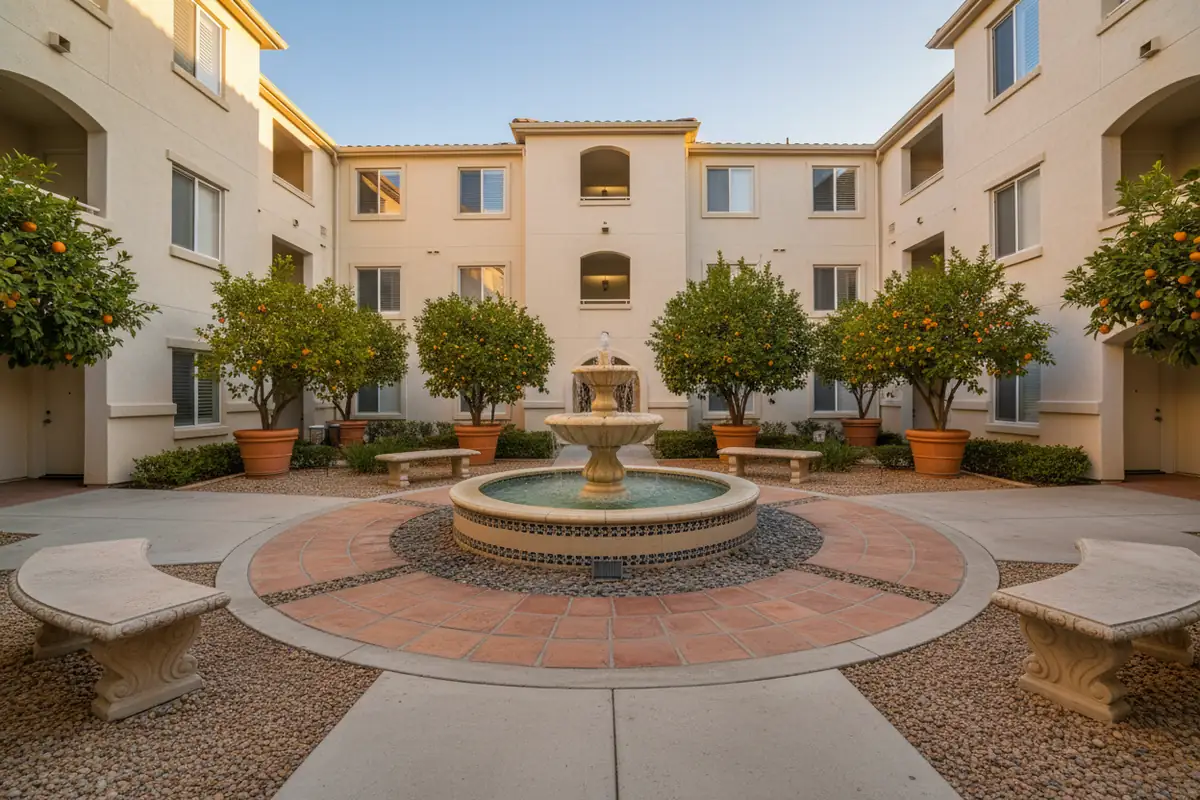
A condo courtyard fountain, a shared space kept up by monthly HOA dues.
Immediate answer

California HOA arrears explained: the certified-mail notice before a lien, the recorded lien, the $1,800 or 12-month foreclosure limit, and the 90-day redemption period.

On this page
  1. What HOA Arrears Mean for a California Owner
  2. Who Faces HOA Arrears and When It Becomes a Formal Matter
  3. The Notice Before the Lien Under Civil Code Section 5660
  4. The Assessment Lien Under Civil Code Section 5675
  5. When an HOA May Foreclose: The Limit Under Civil Code Section 5720
  6. The Redemption Period After an HOA Foreclosure Sale Under Civil Code Section 5715
  7. Options and Trade-offs for an Owner Behind on HOA Dues
  8. Mistakes to Avoid When HOA Assessments Are Past Due
  9. Frequently asked questions
  10. Sources

If you are behind on homeowners association dues in California, the association has to follow steps set by state law before it can act against your home. It must send a written notice before it records a lien. It may foreclose that lien only above a set balance or after a set delinquency. After a nonjudicial HOA foreclosure sale, the owner has a period to redeem the home.

You may be holding a letter from your association, or a certified-mail envelope, and wondering whether this is a billing problem or the first stage of losing the house. Some readers are also behind on a mortgage, and the two debts start to blur together. This guide from Silver Lining Foreclosure Solutions explains how California treats past-due HOA assessments, stage by stage, so you can see where your home stands and what can still be done to keep it.

What HOA Arrears Mean for a California Owner

"Arrears" means money that is past due. For an HOA, the money is the assessment, which is the regular or special charge the association levies on each owner. An unpaid assessment is called a delinquent assessment. California's Civil Code, not only the association's own collection policy, sets the steps that follow.

Those steps come in stages: a written notice, then a recorded lien, then possible foreclosure, and after some sales a redemption period. Each stage has its own rules. Falling behind starts a sequence the law controls. It does not mean an immediate loss of the home.

Who Faces HOA Arrears and When It Becomes a Formal Matter

Is your home part of an association at all? HOA assessments arise in a common interest development, such as a condominium or a planned development, where each owner holds a "separate interest" (their own unit or lot) and shares the common areas. Both regular and special assessments can fall into arrears.

The California Courts' Foreclosures self-help guide notes that a home can be foreclosed on for debts other than a mortgage, and that an HOA "can foreclose on your home in some cases if you owe HOA dues or other debts." The power to lien comes from the Civil Code as well as the governing documents. The formal process begins when the association takes the steps the statute requires. A missed payment alone does not start it.

The Notice Before the Lien Under Civil Code Section 5660

Under Civil Code section 5660, at least 30 days before recording a lien, the association must notify the owner of record in writing by certified mail. The owner of record is the person shown as owner in the official records. The notice must include:

  • a general description of the association's collection and lien enforcement procedures, how the amount was calculated, a statement of the right to inspect association records, and a boldface warning that a home placed in foreclosure for unpaid assessments "may be sold without court action";
  • an itemized statement of the charges, including any delinquent assessments, fees and reasonable costs of collection, reasonable attorney's fees, late charges and interest;
  • a statement that the owner is not liable for those charges if the assessment was in fact paid on time;
  • the right to request a meeting with the board;
  • the right to dispute the debt through the association's "meet and confer" program;
  • the right to request alternative dispute resolution with a neutral third party before foreclosure, except that binding arbitration is not available if the association intends a judicial foreclosure.

This notice is the clearest point to respond before a lien reaches the title.

The Board Meeting and Dispute Resolution Rights in Plain Terms

The last three items in the notice give the owner three separate ways to be heard before matters go further:

  • A meeting with the board. The owner may ask to meet with the association's board. This is the setting where the balance, the reasons behind the arrears and possible repayment terms are often discussed directly with the people who decide on collection.
  • "Meet and confer." This is the association's own internal program for disputing the assessment debt. It begins with a written request from the owner and keeps the discussion between the owner and the association.
  • Alternative dispute resolution (ADR). This brings in a neutral third party before the association may start foreclosure. The one stated limit is that binding arbitration is not available when the association intends to foreclose through the courts.

For smaller balances, section 5720 adds a related requirement, covered in the foreclosure section below. Together, these rights place a chance to talk, dispute or negotiate ahead of the lien and ahead of any foreclosure.

The Assessment Lien Under Civil Code Section 5675

A lien is a legal claim against property that secures a debt. Under Civil Code section 5675, the assessment, plus collection costs, late charges and interest, becomes a lien on the separate interest once the association records a "notice of delinquent assessment" with the county recorder where the home sits.

That notice states the amount, a legal description of the property and the record owner's name. The itemized statement from the earlier notice is recorded with it. For a nonjudicial foreclosure, the notice must name the trustee authorized to sell. A copy must be mailed by certified mail to every owner in the association's records no later than 10 calendar days after recordation. A recorded lien sits on the title and can affect a sale or refinance, which makes it more than a collection letter.

When an HOA May Foreclose: The Limit Under Civil Code Section 5720

Civil Code section 5720 applies to assessment debts arising on and after January 1, 2006. It works in three parts.

Below the threshold. If the delinquent regular or special assessments are less than $1,800, the association may not collect through judicial (court) or nonjudicial (out-of-court) foreclosure. That amount does not count accelerated assessments, late charges, fees, collection costs, attorney's fees or interest.

What the association may do instead. It may sue in small claims court, or it may record a lien. Before recording such a lien, it must offer dispute resolution and take part in it if the owner asks.

When foreclosure becomes possible. The association may not foreclose that lien until the secured assessments equal or exceed $1,800, again excluding those extra charges, or are more than 12 months delinquent. The limit does not apply to time-share estates or to assessments owed by the developer.

A smaller balance therefore carries a different risk than a larger or older one. An HOA lien foreclosure is also a separate process from any mortgage foreclosure by a lender.

The Redemption Period After an HOA Foreclosure Sale Under Civil Code Section 5715

Redemption means the owner's right to reclaim the home after a foreclosure sale. Under Civil Code section 5715, which also applies to debts arising on and after January 1, 2006, a nonjudicial foreclosure by an association is subject to a right of redemption that "ends 90 days after the sale." The notice of sale must state that the property is sold subject to that right.

This differs from a lender's nonjudicial foreclosure. The courts' guide says that in that case the owner does "not have the right to buy your home back after it's sold." The HOA redemption period is a window the statute creates. Keeping the home through it is not assured, and how to redeem depends on the facts.

Options and Trade-offs for an Owner Behind on HOA Dues

Several paths can keep the home. Paying the balance in full, or reaching a payment arrangement the board accepts, clears the arrears most directly. The board meeting and the dispute resolution rights described above are where such terms are often raised. If the amount itself is in dispute and the matter becomes contested, that is a different subject handled by an attorney.

Selling. A recorded lien is generally addressed at closing, often from the sale proceeds. A sale can go through a real estate agent on the open market, or directly to a buyer who pays cash and takes the home in its present condition. A direct offer is often lower than an open-market price, because that buyer takes on repairs, risk and the cost of reselling. In exchange, the seller gets less preparation, fewer showings and less dependence on a buyer's loan. The notices and the lien stay the same whoever buys.

Comparing the paths. Written offers and estimated net proceeds show how the choices differ. Net proceeds are the price less commissions, repairs, carrying costs, loan payoffs and closing costs. Which path fits depends on the balance, the stage reached, any mortgage default, and the facts and law that apply to the home.

Mistakes to Avoid When HOA Assessments Are Past Due

  • Setting aside the section 5660 notice. It carries the meeting and dispute rights that come before a lien.
  • Reading only the association's collection policy. The Civil Code sets the controlling steps.
  • Treating the HOA and the mortgage lender as one process. They are separate debts with separate rules, and a lien can follow either.
  • Assuming a small balance rules out foreclosure. The section 5720 threshold and its 12-month condition decide that, not an estimate.
  • Overlooking the redemption period after an association's nonjudicial sale.

The courts' guide also warns that some companies offer foreclosure help, take money, "and then do nothing to help."

Free to ask

Tell us a little about your situation

Share a few details. You decide what happens next.

What the form asks

  1. Your directionKeep my home, explore selling, or not sure yet.
  2. Your situationMissed payments, a notice, property taxes, liens or something else.
  3. How to reach youYour name, email and phone, and how you'd like to be reached.
Explore my options

Free to ask · You decide

Not sure which path fits?

Share a few details and we'll help you understand options to keep or sell — on your timeline.

Explore my options Call (888) 274-9351

Free to ask

Tell us about your situation

Share a few details. You decide what happens next.

Privacy PolicyTerms of Use

Testimonials

I didn't want promises that a cash buyer could magically stop foreclosure. I wanted real numbers and deadlines.

P.C., Vista, CA

Talk to a HUD-approved counselor

Independent housing counseling is generally free or low-cost. We encourage it no matter which path you choose.

Search HUD's counselor directory ↗

Frequently asked questions

What happens if I ignore an HOA delinquency notice in California?

The association may go on to record a notice of delinquent assessment, which makes the debt a lien on your title under section 5675. Ignoring the notice also lets the board meeting and dispute resolution offered in it go unused, and those are the steps the statute places before the lien.

Can an HOA foreclose on my home in California?

Yes, in some cases. Foreclosure turns on the section 5720 limits described above: the size of the core assessment balance, how long it has been delinquent, and when the debt arose. HOA foreclosure runs separately from any mortgage lender's foreclosure, so an owner current on the mortgage can still face it.

How long do I have to reclaim my home after an HOA foreclosure sale?

Section 5715 gives a redemption right after an association's nonjudicial sale that ends 90 days after the sale. The statute text quoted here does not state the redemption amount. The notice of sale is the document that must disclose that the right exists.

What notice must an HOA give before recording a lien in California?

The association must send a certified-mail notice with the contents listed in the section 5660 discussion above. One detail stands out: the notice must say you owe no charges, interest or collection costs if the assessment was actually paid on time. Proof of payment matters.

Does an HOA lien affect my ability to sell or refinance my home?

It can. A recorded lien appears on title, and a buyer, lender or title company will generally expect it to be resolved, often by payment from proceeds at closing. Whether the remaining equity covers both the lien and any mortgage depends on the figures in your own case.

Can I write off HOA fees on my taxes?

That depends on how the property is used and on your own tax circumstances. A CPA, an enrolled agent or a tax attorney reviews that question.

Can HOA board members be sued by homeowners in California?

A dispute between an owner and board members is a contested matter, and an attorney handles it. This page explains the assessment, lien and foreclosure steps the Civil Code sets out.

Sources

  1. 01Civil Code section 5660 (California Legislative Information) · California Legislative Information
  2. 02Civil Code section 5675 (California Legislative Information) · California Legislative Information
  3. 03Civil Code section 5720 (California Legislative Information) · California Legislative Information
  4. 04Civil Code section 5715 (California Legislative Information) · California Legislative Information
  5. 05California Courts Self-Help Guide: Foreclosures · selfhelp.courts.ca.gov