Skip to content
Silver Lining Foreclosure Solutions

California county guide

Foreclosure Help in Los Angeles County

Homeowners across Los Angeles County face the same California foreclosure framework, with county-level offices handling recordings and property taxes.

Updated November 21, 2026

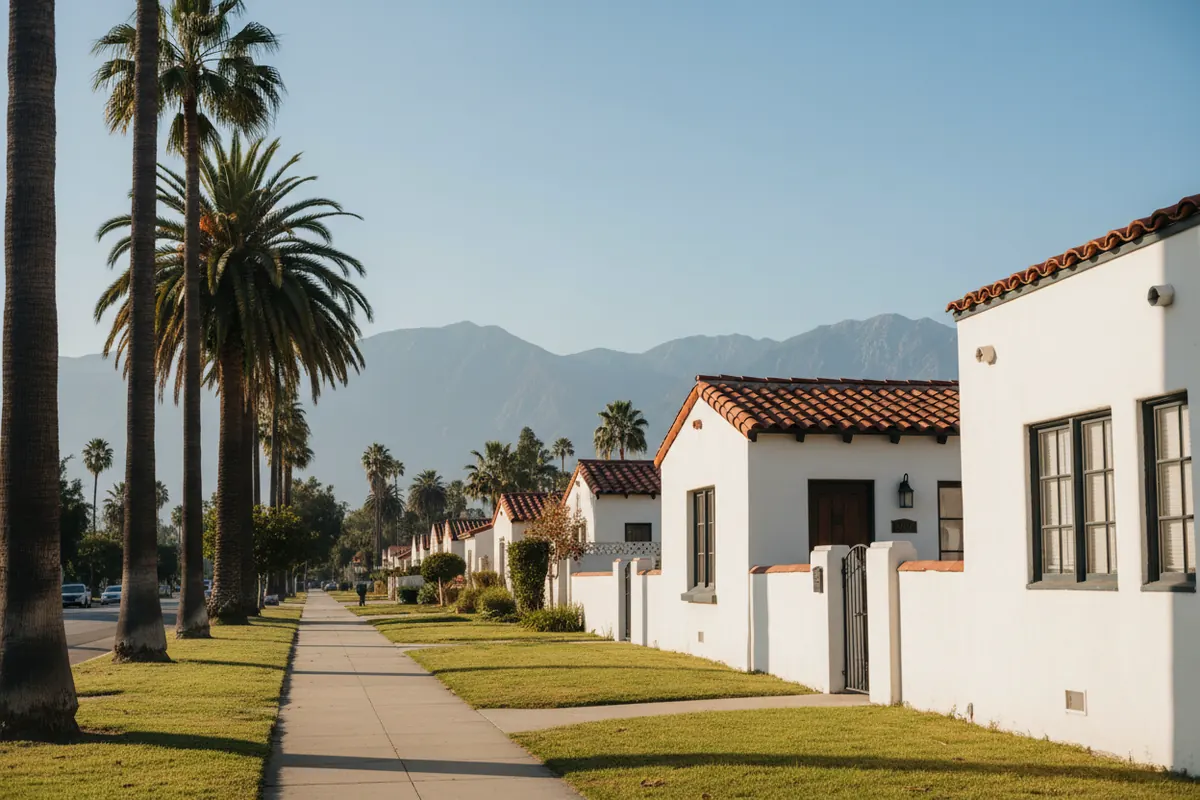
Arched-window bungalows beneath tall fan palms in an older Los Angeles County neighborhood.
Immediate local answer

Los Angeles County foreclosure help: where a notice of default is recorded, the three months before a notice of sale, the July 1 tax default rule, and options.

On this page
  1. Local Snapshot: How Foreclosure Moves Through Los Angeles County
  2. Common Situations Homeowners in This Area Face
  3. Local Offices and Records: Where Los Angeles County Handles These Matters
  4. Options for Owners Behind on a Mortgage in This Area
  5. Local Costs and Timing in Los Angeles County
  6. Frequently asked questions
  7. Sources

If you are behind on a mortgage or property taxes in Los Angeles County, help starts with knowing which stage you are in. A notice of default recorded with the county recorder opens a California trustee foreclosure. HUD-approved counselors offer free foreclosure prevention services. Reinstatement, modification, forbearance, a sale or bankruptcy may still be possible.

You may have a letter from a loan servicer about missed payments, a notice of default in your hands, or a tax bill you could not pay this year. You may be wondering whether the house can still be kept and who in Los Angeles County you can ask. This page walks through how the process moves through the county's offices, what each recorded document means, and which paths may still lead to keeping the home. California's foreclosure and property tax statutes are the same in every county. What changes here is which offices hold the records and send the bills.

Local Snapshot: How Foreclosure Moves Through Los Angeles County

In Los Angeles County, a trustee foreclosure leaves its trail in the records of the Los Angeles County Registrar-Recorder/County Clerk. In a trustee foreclosure, the home is sold under a deed of trust without a court case. A deed of trust is the recorded document that pledges the house as security for the loan.

Under Civil Code section 2924, a power of sale generally cannot be used until the trustee, mortgagee or beneficiary, or an authorized agent of one of them, first files a notice of default for record in the recorder's office of each county where the property or part of it is located. The beneficiary is the lender or the party that now holds the loan. The same section generally allows only certain parties to record that notice: the holder of the beneficial interest, the original or substituted trustee, or the holder's designated agent.

For an owner, the document on record shows the stage. A recorded notice of default means the formal process has begun. A recorded notice of sale means a date has been set.

The Registrar-Recorder/County Clerk's Recording Requirements page says that the Assessor's Parcel Number is required on a notice of default and a notice of trustee's sale. The same page says a certified copy of a recorded document may be requested. That gives a homeowner a way to get the exact document that was filed against the parcel.

Common Situations Homeowners in This Area Face

Missed mortgage payments and a notice of default. When the lender starts the process, the notice of default is the written record of what it says went wrong. Under Civil Code section 2924, that notice includes all of the following:

  • A statement identifying the deed of trust or mortgage, with the trustor's name and where it is recorded, or a description of the property.
  • A statement that a breach of the loan obligation has occurred.
  • The nature of each breach known to the beneficiary, and the beneficiary's election to sell.
  • If the default is curable, a statement about curing it.

For a home of no more than four units, the same section requires an attached summary in English and other languages. Reading this notice closely is often the clearest way to see what the lender says is owed and why.

A notice of trustee's sale. This is the stage where the calendar matters most. Civil Code section 2924 generally requires that not less than three months pass from the filing of the notice of default. After that, the trustee gives notice of sale stating the time and place, in the manner and for the time another section of the law sets. The notice of sale may be recorded up to 5 days before the three months end, but only if the sale date is no earlier than three months and 20 days after the notice of default was recorded. When a sale is postponed by at least 10 business days, the borrower must get written notice of the new date, no later than 5 business days following the postponement. Put simply, a notice of sale means a sale date exists, and a postponement moves that date rather than erasing it.

Unpaid property taxes. Under Rev. & Tax. Code section 3436, taxes, assessments, penalties and costs on real property that remain unpaid are declared in default by operation of law at 12:01 a.m. on July 1. Property that is already tax-defaulted and possessory interests are excepted. "Tax-defaulted" means the unpaid amount has moved from a late bill to defaulted status. A missed tax bill is a separate debt from the mortgage, with its own consequences.

HOA assessments and judgment liens. Unpaid homeowners association dues and court judgments can attach to a property as liens alongside a mortgage default. A lien is a recorded claim against the property. The amount owed, who holds each lien, and the order of priority all depend on the documents involved, so each lien is its own question.

Local Offices and Records: Where Los Angeles County Handles These Matters

Los Angeles County Registrar-Recorder/County Clerk. Notices of default and notices of trustee's sale are recorded here. The office's Recording Requirements page says documents may be recorded by mail and that in-person appointments can be scheduled up to three weeks in advance. It also gives (800) 201-8999 for questions about the recording process.

Los Angeles County Treasurer and Tax Collector. The Treasurer and Tax Collector's Secured Property Taxes General Information page says the annual secured bill is mailed to Los Angeles County owners by November 1 and is due in two installments. That page gives these delinquency dates:

  • December 10 for the first installment, due November 1.
  • April 10 for the second installment, due February 1.

When a delinquency date falls on a Saturday or Sunday, the page says it moves to the close of business on the next business day. The same page explains two numbers printed on the bill:

  • The ten-digit Assessor's Identification Number (AIN) identifies the parcel.
  • The six-character PIN is used to pay current-year and defaulted taxes online.

Los Angeles County Consumer and Business Affairs. The California Courts' Foreclosure and mortgage help page lists this county department as a source of information and resources for anyone having trouble paying a mortgage or facing foreclosure in L.A. County.

HUD-approved housing counseling and state relief. The same California Courts page links a lookup for HUD-approved foreclosure avoidance counselors and says they offer free foreclosure prevention services. It also points to:

  • California Housing Finance Agency information on mortgage relief grants and other hardship assistance offered through the State of California.
  • Consumer Financial Protection Bureau guidance.
  • LawHelpCA, a lookup for legal aid and low-cost services by county.

These are independent public and nonprofit resources, so options can be reviewed there without anyone selling anything. The state mortgage relief information is a place to learn whether hardship assistance may apply alongside the options below.

Options for Owners Behind on a Mortgage in This Area

Options that keep the home come first here. Which ones are open depends on the facts and the law that applies, including the loan documents, the stage reached and the amount owed. California has additional homeowner protections that can bear on how a servicer handles a loan while these options are under review; how they apply to a particular loan is a question for a counselor or attorney.

Reinstatement. Reinstatement means paying the overdue amount to bring the loan current. Civil Code section 2924 requires the notice of default to say so when the default is curable, so that notice is the first place to see whether this path is described.

Loan modification. A modification is a permanent change to the loan's terms, such as the rate, the term or the payment. It is agreed with the servicer, and approval is not assured.

Forbearance. Forbearance is a temporary pause or reduction in payments that the servicer agrees to, often after a hardship. The missed amount still has to be dealt with later under the terms of the agreement.

State mortgage relief assistance. The California Housing Finance Agency information mentioned above covers mortgage relief grants and other hardship assistance. Whether a home qualifies depends on that program's own terms.

Short sale. In a short sale, the home sells for less than the loan balance and the lender agrees to accept less. The lender's approval is a separate negotiation.

Selling before the trustee's sale. A home can be listed with a real estate agent on the open market or sold directly to a buyer who takes it as it is. A direct offer is often lower than what the open market might bring, because that buyer absorbs the repairs, the risk and the cost of reselling. In exchange, the seller usually deals with less preparation, fewer showings and less dependence on a buyer's loan. Neither path skips a required disclosure, a lien payoff or a tax. Comparing written offers and estimated net proceeds shows what each path leaves after payoffs, commissions and closing costs.

Bankruptcy. Bankruptcy is a federal court process that can affect a foreclosure. Its effect on a particular case is a legal question for an attorney, as is any contested matter with a lender.

Housing counseling. The free HUD-approved counseling described in the local offices section can be a way to compare these options side by side.

Through the form on Silver Lining Foreclosure Solutions, a homeowner can request an options consultation. Two practical starting points are the recorded notice of default, if there is one, and whether it states that the default is curable, and the Treasurer and Tax Collector's records for any defaulted taxes on the AIN.

Local Costs and Timing in Los Angeles County

Foreclosure timing. The notice of default and notice of sale timeline under Civil Code section 2924 appears in the notice of trustee's sale discussion above. Each step is a recorded event an owner can check, not a guess.

Documentary transfer tax. A documentary transfer tax applies if the home is sold. The Registrar-Recorder/County Clerk's Documentary Transfer Tax General Information page, read 2026-11-21, says the county tax is $0.55 for each $500 or fractional part. It applies when the value conveyed, not counting liens that remain on the property, exceeds $100. The page also lists special additional rates for Culver City, Los Angeles, Pomona, Redondo Beach and Santa Monica. Some of those rates carry effective dates, such as the City of Los Angeles rates effective 7/1/26. On a sale, this tax reduces what the seller nets, and the amount depends on the city where the home sits.

Recording fees. The Recording Requirements page says all applicable fees must be paid at the time of recording. As read 2026-11-21, it gives $6 for the first page and $3 for each additional page for a certified copy. The office's fee page lists other recording fees.

Tax default timing. Tax default timing follows Rev. & Tax. Code section 3436 and the county's installment dates described above. Missing an April 10 delinquency date and leaving the balance unpaid can carry the debt into defaulted status on July 1.

Free to ask · You decide

Not sure which path fits?

Share a few details and we'll help you understand options to keep or sell — on your timeline.

Explore my options Call (888) 274-9351

Free to ask

Tell us about your situation

Share a few details. You decide what happens next.

Privacy PolicyTerms of Use

Testimonials

I didn't want promises that a cash buyer could magically stop foreclosure. I wanted real numbers and deadlines.

P.C., Vista, CA

Talk to a HUD-approved counselor

Independent housing counseling is generally free or low-cost. We encourage it no matter which path you choose.

Search HUD's counselor directory ↗

Frequently asked questions

Where is a notice of default recorded in Los Angeles County?

It is filed with the Los Angeles County Registrar-Recorder/County Clerk. Civil Code section 2924 requires recording in the county where the property sits. The county requires the Assessor's Parcel Number on the notice, which helps tie it to your parcel.

What is the difference between a notice of default and a notice of trustee's sale?

The first opens the process and states the claimed breach. The second announces when and where the sale will take place. The waiting period between them is covered in the notice of trustee's sale section above.

What happens to my property taxes if I stop paying them in Los Angeles County?

The unpaid installments first become delinquent after the county's December 10 or April 10 dates. Anything still unpaid becomes tax-defaulted on July 1. Defaulted taxes can be paid online using the PIN printed on the bill. The Treasurer and Tax Collector can answer account-specific questions.

Is free foreclosure help available in Los Angeles County?

Yes. The California Courts resource page lists HUD-approved counselors, state mortgage relief information and Los Angeles County Consumer and Business Affairs, as described in the local offices section.

Can I sell my home before the trustee's sale date?

A sale before the trustee's sale is one option, alongside paths that keep the home. Payoffs, liens, transfer tax and disclosures apply no matter who buys. A sale closing does not settle anything until the loan is paid off through it.

How do I find out if a notice of default has been recorded against my property?

The Registrar-Recorder/County Clerk records these notices and offers certified copies of recorded documents. The parcel number on your tax bill helps identify the property when you ask.