Skip to content
Silver Lining Foreclosure Solutions

Homeowner guide

How to Prepare a House for Sale Before Foreclosure

Updated November 21, 2026

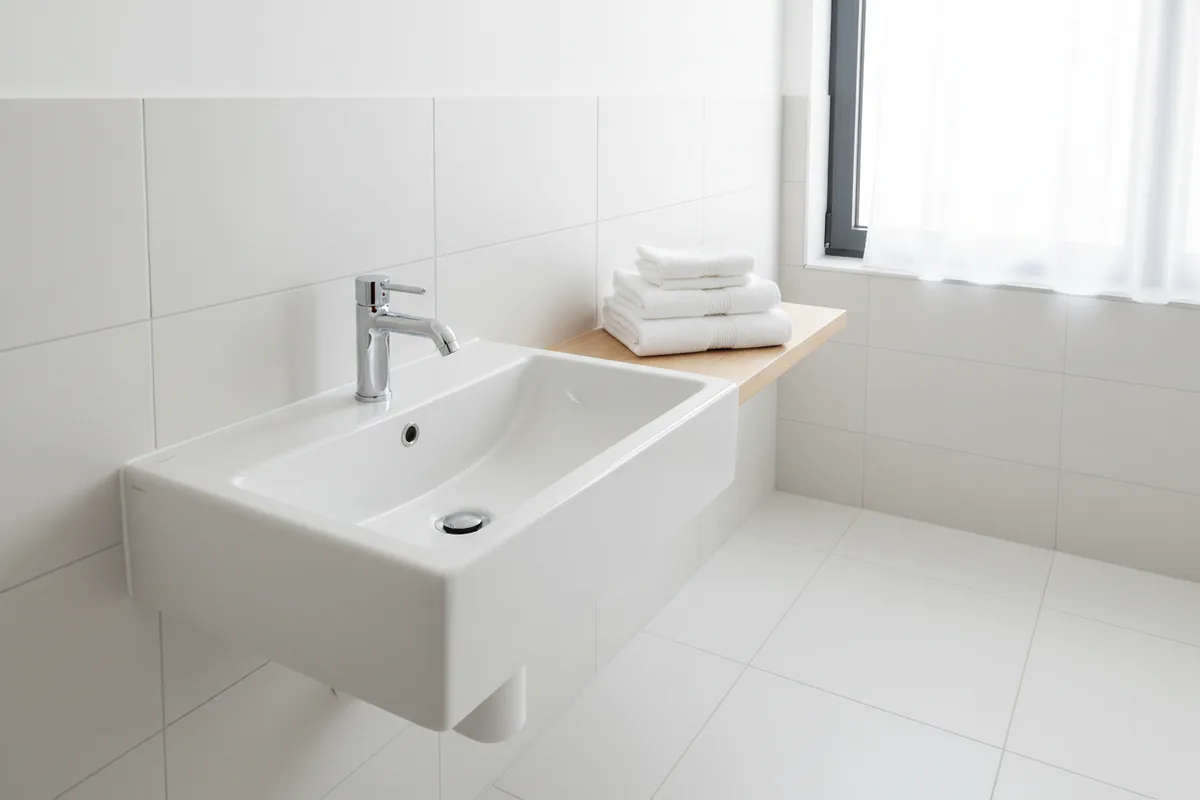
A new faucet above a clean sink, a small fix before listing.
Immediate answer

California sellers facing foreclosure still owe a smoke alarm statement, water heater certification, plumbing fixture disclosure, and a transfer disclosure.

On this page
  1. What Preparing for Sale Means When You Are Facing Foreclosure
  2. Who These Rules Apply To: Owners of Record in California
  3. Rules, Disclosures and Fine Print for a Home Sale Before Foreclosure
  4. Options and Trade-offs for Your House Before the Trustee's Sale
  5. Mistakes to Avoid When Selling Under a Foreclosure Notice
  6. What to Do Next With the House
  7. Frequently asked questions
  8. Sources

A California homeowner who sells before the trustee's sale prepares the same way any home seller does. That means an operable smoke alarm and a written statement about it, a carbon monoxide device where the law calls for one, a braced water heater with a written certification, a plumbing fixture disclosure, a pest report when the contract or loan requires one, and a transfer disclosure statement.

An owner holding a notice of default or a notice of trustee's sale is often juggling the lender's letters, the monthly bills and the question of whether to keep the house at all. When a sale is one of the paths being considered, the next question is practical: what has to be in place before a buyer can take title. This guide walks through each item California law names, what each one asks of the seller, and where the facts of a particular house change the answer.

What Preparing for Sale Means When You Are Facing Foreclosure

Selling before the trustee's sale is one option a California homeowner has. It sits alongside options that keep the home, which are covered in the options section below. When an owner does sell, the preparation duties on this page apply to that sale.

The transfer disclosure rules come from an article of the Civil Code. Under Civil Code section 1102, that article applies, except as another section of it provides, to any transfer of single-family residential property by sale, exchange, real property sales contract, lease with an option to purchase, any other option to purchase, or ground lease coupled with improvements. The same section adds that any waiver of the article's requirements "is void as against public policy." Put simply, if a buyer offers to skip the disclosures, they are still owed.

These duties belong to the seller. They stay the same no matter who the buyer is or how the deal is structured. This page explains what the law asks a seller to prepare or disclose. It does not estimate a cost or predict how long a sale takes.

Who These Rules Apply To: Owners of Record in California

The California Department of Real Estate's guide, Disclosures in Real Property Transactions (DRE RE 6), says a seller of residential real property of 1 to 4 dwelling units "(with a few exceptions)" must give the buyer a Real Estate Transfer Disclosure Statement. The same guide lists foreclosure sales among transfers exempt from those disclosure requirements. That exemption covers the foreclosure sale itself. An owner's own sale before the trustee's sale is a different transfer.

The seller is the owner of record: the person or people whose names are on the recorded deed. Someone who lives in the house is not the seller for that reason alone. The lender holds a loan secured by the house but does not own it. Where two or more people hold title, who has to sign depends on how title is held and what the recorded documents say. That is a legal question, and a contested title or a disagreement among co-owners is a matter for an attorney.

For a homeowner facing foreclosure who is the owner of record, the duties that follow belong to that owner.

Rules, Disclosures and Fine Print for a Home Sale Before Foreclosure

Six rules make up the core of the preparation. How each one applies depends on the facts of the house, such as the type of dwelling, its appliances and what the contract says, and on the law that applies to it.

Smoke alarms

Health and Safety Code section 13113.8 says every single-family dwelling and factory-built housing "which is sold shall have an operable smoke alarm." The alarm must have been approved and listed by the State Fire Marshal when it was installed. Unless local rules prohibit it, a battery-operated alarm that met the standards at the time of installation satisfies the section. "Single-family dwelling" here includes a one- or two-unit dwelling, but not a manufactured home, a mobilehome or a commercial coach.

The person transferring title gives the buyer a written statement saying the house complies. It can go in the receipt for deposit, in an addendum, or in a separate document, and in a sale it is delivered as soon as practicable before title transfers. The section exempts certain transfers, including foreclosure sales, transfers to the lender by a borrower in default, transfers by court order and transfers between co-owners. A failure to comply does not undo the transfer; the section limits the remedy to actual damages not to exceed $100, exclusive of court costs and attorney's fees.

In practice, this comes down to checking that each alarm works before signing the statement.

Carbon monoxide devices

Health and Safety Code section 17926 requires an owner of a dwelling unit intended for human occupancy to install a carbon monoxide device approved and listed by the State Fire Marshal. The duty applies to each existing unit that has a fossil fuel burning heater or appliance, a fireplace, or an attached garage. For existing single-family dwelling units, the section's date is "on or before July 1, 2011." The number and placement of devices follow the building standards for new construction or the manufacturer's instructions, where it is technically feasible.

A violation is an infraction with a maximum fine of $200 for each offense, and the owner first receives a 30-day notice to correct. A failure to comply does not invalidate a transfer of title, and actual damages are capped at $100, exclusive of court costs and attorney's fees.

For a house with a gas furnace, a fireplace or an attached garage, this means confirming a device is in place.

Water heater bracing

Health and Safety Code section 19211 requires new, replacement and existing residential water heaters to be "braced, anchored, or strapped" to resist falling or horizontal movement in an earthquake. At a minimum, they must be secured as the California Plumbing Code provides, or as a city or county has modified it. The section covers standard water heaters of not more than 120 gallons for which a preengineered strapping kit is readily available.

The seller certifies compliance to the prospective purchaser in writing. That certification can appear in the Homeowner's Guide to Earthquake Safety, in the sales contract or receipt for deposit, or in the transfer disclosure statement.

A look at the straps before signing is what makes the certification accurate.

Water-conserving plumbing fixtures

Civil Code section 1102.155 requires the seller of single-family residential property subject to the disclosure article to disclose in writing that California single-family residences must be equipped with water-conserving plumbing fixtures on or after January 1, 2017. The seller must also disclose whether the property includes any noncompliant fixtures. The seller affirms that this is the seller's own representation, not an agent's, and that it is not part of the contract, not a warranty, and not a substitute for inspections.

For the owner, this is an honest answer about the toilets, showerheads and faucets in the house.

The structural pest control inspection report

Civil Code section 1099 requires the transferor, fee owner or agent to deliver a copy of a structural pest control inspection report to the buyer as soon as practical before transfer of title. The duty applies only if the report or certification is a condition of the contract or a requirement of the buyer's financing. A notice of work completed, or a certification, that the seller receives before transfer must also be passed along. Missing this step does not invalidate the transfer on that basis alone, unless the failure would be a valid ground for rescission.

The DRE guide states it plainly: "The law does not require that a structural pest control inspection be performed prior to transfer." The Structural Pest Control Board's page, How do I search for termite inspection information?, explains that anyone can search the Board's Wood Destroying Organism System to see whether a property was inspected during the last two years, and can request copies of the reports.

A past report may already be on file, and the purchase contract shows whether a report is required at all.

The Transfer Disclosure Statement

The DRE guide describes the Transfer Disclosure Statement (TDS) as the form that "describes the condition of a property." In a sale, it goes to the prospective buyer as soon as practicable and before transfer of title, with the seller and any agents taking part. The statement must specify the environmental hazards the seller is aware of, such as asbestos, radon or lead-based paint.

The owner fills it out from what the owner knows about the house. A real estate agent can answer questions about completing the form, and disclosure disputes are a matter for an attorney.

Other disclosures this page does not cover

California sales can involve further disclosures beyond the six above, depending on where the house sits, when it was built and what assessments apply to it. Natural hazard disclosures, lead-based paint disclosures for older homes, and special tax or assessment disclosures are examples. This page does not describe them. A real estate agent or an attorney can say which apply to a particular property.

Options and Trade-offs for Your House Before the Trustee's Sale

Options that keep the home come first. Reinstatement means paying the past-due amount so the loan is current again. A loan modification changes the loan's terms with the lender's agreement. Forbearance lets payments pause or shrink for a period after a hardship. A bankruptcy filing is a court process with its own rules. A HUD-approved housing counselor can go over these options with an owner, and an attorney can explain bankruptcy.

When a sale is the path, the house can be sold in its present condition. "As-is" describes the condition a buyer accepts. It does not remove the smoke alarm statement, the water heater certification, the fixture disclosure or the TDS, because Civil Code section 1102 voids any waiver.

A listing on the open market often brings a higher price, but it can mean preparing the house, holding showings and waiting on a buyer's loan approval. A direct sale to a cash buyer often comes in lower than an open-market price, because that buyer takes on the repairs, the risk and the cost of reselling. In return, the seller gets less preparation, fewer showings and less dependence on a buyer's loan. The disclosures are the same either way.

Comparing written offers and estimated net proceeds shows which path fits. Net proceeds are the price less commissions, repairs, carrying costs, loan payoffs and closing costs.

Mistakes to Avoid When Selling Under a Foreclosure Notice

Several mistakes come up often:

  • Assuming the foreclosure exemption covers an owner's own sale. The exemptions in Health and Safety Code section 13113.8 and the DRE guide name foreclosure sales and transfers to a lender by a borrower in default. They do not name an ordinary sale by the owner.
  • Treating "as-is" as a waiver. Under Civil Code section 1102, a waiver of the article's requirements is void.
  • Signing a certification without checking. The smoke alarm statement and the water heater certification are statements of fact by the seller.
  • Overlooking an existing pest report. The Board's search may turn up a report that was prepared recently.
  • Leaving known hazards off the TDS. The statement asks for hazards the seller is aware of.

What to Do Next With the House

The deed shows who the owners of record are and who has to sign. The notice of default or notice of sale shows what stage the foreclosure has reached. A walk through the house with the TDS in hand, checking the alarms, the carbon monoxide devices, the water heater straps and the fixtures, shows what can be signed truthfully.

Many owners also look up the property in the Structural Pest Control Board's database, and talk through the keep-home options with a HUD-approved housing counselor before choosing a path.

Free to ask

Tell us a little about your situation

Share a few details. You decide what happens next.

What the form asks

  1. Your directionKeep my home, explore selling, or not sure yet.
  2. Your situationMissed payments, a notice, property taxes, liens or something else.
  3. How to reach youYour name, email and phone, and how you'd like to be reached.
Explore my options

Free to ask · You decide

Not sure which path fits?

Share a few details and we'll help you understand options to keep or sell — on your timeline.

Explore my options Call (888) 274-9351

Free to ask

Tell us about your situation

Share a few details. You decide what happens next.

Privacy PolicyTerms of Use

Testimonials

I didn't want promises that a cash buyer could magically stop foreclosure. I wanted real numbers and deadlines.

P.C., Vista, CA

Talk to a HUD-approved counselor

Independent housing counseling is generally free or low-cost. We encourage it no matter which path you choose.

Search HUD's counselor directory ↗

Frequently asked questions

Do I have to make repairs before selling my house in foreclosure?

Not in general; a house can be sold in its present condition. The exceptions are the safety items, which have to be in place rather than simply disclosed: a working smoke alarm, a carbon monoxide device where the dwelling has the features section 17926 lists, and a braced water heater. Anything else known to be wrong is disclosed on the TDS rather than fixed.

What disclosures does a California seller have to make?

Beyond the items described above, several of them can travel together in one document. The water heater certification, for example, can sit inside the TDS, and the smoke alarm statement can go in the receipt for deposit or an addendum. Some properties also call for further disclosures not covered on this page.

Is a pest inspection required before selling a home in California?

The DRE guide says the law does not require an inspection before transfer. Delivery of a report becomes required only when the contract or the buyer's financing makes the report or certification a condition, as Civil Code section 1099 states.

Can I sell my house before the foreclosure sale date?

Yes, a sale before the trustee's sale is one of the paths open to an owner, alongside the keep-home options. Which one fits depends on the loan, the notices and the owner's goals, and a HUD-approved housing counselor or an attorney can look at the full picture.

What does "as-is" mean in a California home sale?

"As-is" is a term of the deal, not an exemption from the law. It tells the buyer the seller will not make repairs, but it does not change what has to be disclosed. The foreclosure exemption in the DRE guide covers the foreclosure sale, not an owner's own sale.

How do I prevent my house from going into foreclosure?

The keep-home paths are reinstatement, a loan modification and forbearance, with bankruptcy as a court process an attorney can explain. A HUD-approved housing counselor can review the owner's loan, income and notices and explain which may apply. None of these paths comes with an assured result.

Sources

Statutes, regulations and court sources

  1. 01California Civil Code section 1102 · California Legislative Information
  2. 02California Civil Code section 1102.155 · California Legislative Information
  3. 03California Civil Code section 1099 · California Legislative Information
  4. 04California Health and Safety Code section 13113.8 · California Legislative Information
  5. 05California Health and Safety Code section 17926 · California Legislative Information
  6. 06California Health and Safety Code section 19211 · California Legislative Information

Other sources

  1. 07California Department of Real Estate, Disclosures in Real Property Transactions (DRE RE 6) · dre.ca.gov
  2. 08California Structural Pest Control Board, How do I search for termite inspection information? · pestboard.ca.gov